

Michael Weinstein
EntrepreneurMichael Weinstein is a seasoned writer and a dedicated expert in work safety, footwear, and popular shoe brands. With years of research and expertise, he's...Read more
Michael Weinstein
EntrepreneurMichael Weinstein is a seasoned writer and a dedicated expert in work safety, footwear, and popular shoe brands. With years of research and expertise, he's...Read more
Adidas has a complex history, but it is important to note that the brand is not currently affiliated with any Nazi activities. However, during World War II, its founder, Adolf Dassler, had associations with the Nazi Party. It is crucial to separate the brand’s history from its present-day actions. Adidas has since taken steps to distance itself from that past. It has become one of the leading sportswear brands, dedicated to inclusivity, innovation, and style.
Is Adidas A Nazi Company? You might be wondering about the history behind this popular sportswear brand. Let’s dive in and explore the truth!
Adidas, known for its iconic three-stripes logo and high-quality athletic gear, has a captivating story that goes beyond the realm of sports. But is there any truth to the claims linking Adidas to Nazi affiliations? Let’s find out!
In this article, we’ll uncover the historical context, examine the evidence, and separate fact from fiction to determine if Adidas has any connection to the Nazi regime. So, let’s get started on this intriguing journey into the past!

Is Adidas a Nazi Company?
Adidas, one of the largest sportswear companies in the world, has a long and complex history. Over the years, there have been allegations and discussions surrounding its alleged ties to Nazi Germany during World War II. In this article, we will delve into the history of Adidas, explore the controversy surrounding its involvement with the Nazi regime, and examine the company’s response to these accusations.
The Founding of Adidas: A Tale of Sport and Entrepreneurship
The story of Adidas begins in 1924 when two German brothers, Adolf and Rudolf Dassler, started a small shoe company in the town of Herzogenaurach. Their vision was to create innovative athletic footwear to enhance athletes’ performances. At that time, sports were gaining popularity, and the brothers saw a unique opportunity to cater to the growing demand for specialized shoes.
Adolf focused on product development and design, while Rudolf concentrated on sales and marketing. Together, they established a successful business, and their shoes became increasingly popular among athletes in Germany and beyond. The brand, initially named Gebrüder Dassler Schuhfabrik (Dassler Brothers Shoe Factory), soon gained recognition for its quality and innovation.
By the late 1930s, the Dassler brothers’ shoes were worn by professional athletes, including some Olympic gold medalists. However, the outbreak of World War II would soon cast a shadow of controversy over their company.
The Dassler Brothers and Their Alleged Ties to the Nazi Party
During World War II, Germany was under the control of the Nazi regime led by Adolf Hitler. It is during this time that claims of the Dassler brothers’ affiliation with the Nazi Party emerged. Some reports suggest that both Adolf and Rudolf were members of the Nazi Party, while others indicate that only Rudolf had connections with the party.
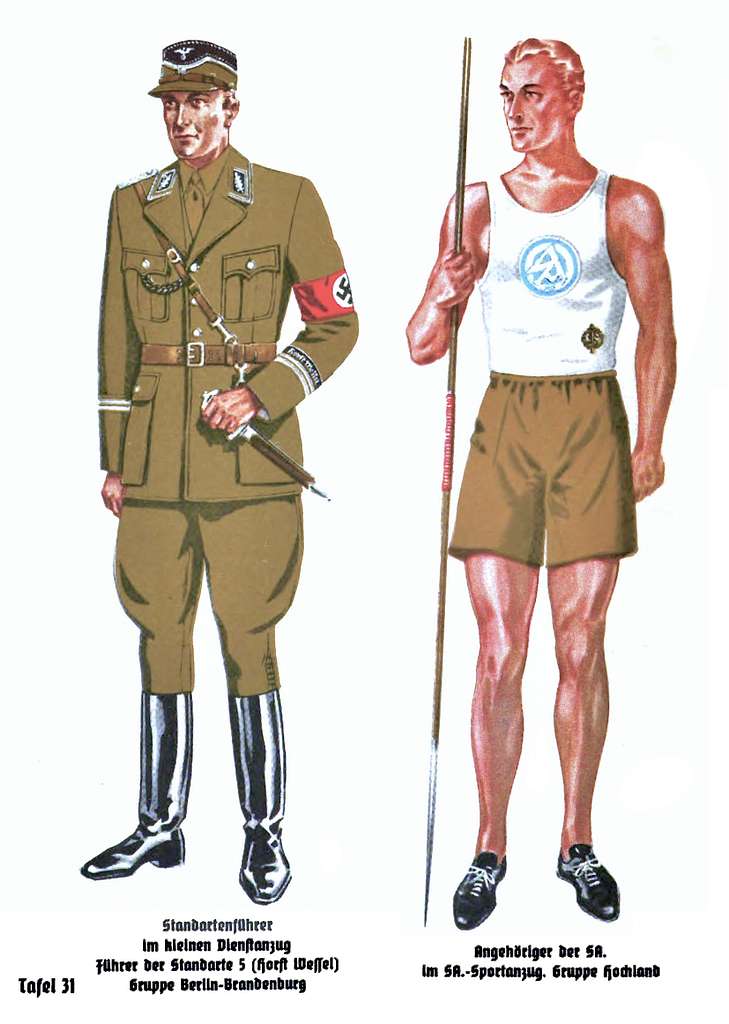
Rudolf Dassler was reportedly a member of the Sturmabteilung (SA), the Nazi Party’s paramilitary organization. It is believed that he used his contacts within the party to secure contracts with the German military, supplying them with shoes during the war. However, there is no concrete evidence that Adolf Dassler was a member of the Nazi Party.
It is important to note that during this era, many German businesses had some level of involvement or collaboration with the Nazi regime, either voluntarily or under pressure. The Dassler brothers were not unique in this regard, as numerous companies in Germany operated under the same circumstances during the war.
Post-War Reconciliation and the Creation of Adidas
Following World War II, the relationship between the Dassler brothers deteriorated. Their conflicting personalities and differing visions led to a bitter rivalry, resulting in a split of their company in 1948. Adolf Dassler renamed his portion of the business “Adidas,” which is a combination of his first and last names, while Rudolf went on to establish his own sports footwear company, eventually called “Puma.”
Despite the acrimonious split, both Adidas and Puma flourished in the post-war years. The brands gained international recognition and became synonymous with athletic footwear and sportswear. In the decades that followed, Adidas evolved into the multinational corporation we know today, with a presence in various sports, including football, basketball, and running.
Adidas has faced its fair share of controversies and challenges throughout the years, but the allegations of Nazi ties have continued to linger. The company has made efforts to address and confront its past, striving to build a more inclusive and responsible brand.
Adidas Today: A Commitment to Social Responsibility
In recent years, Adidas has taken significant steps to acknowledge and learn from its history. The company has actively engaged in initiatives promoting diversity, inclusion, and social responsibility. It has implemented rigorous sustainability practices, including reducing its environmental impact and supporting fair labor practices.
Adidas has also made efforts to contribute positively to society by partnering with organizations that champion social causes. These partnerships have focused on empowering underprivileged communities, promoting gender equality, and supporting sports development programs.
It is crucial to recognize that while Adidas may have had affiliations with the Nazi regime, the brand has evolved significantly since its early years. Holding a company accountable for its past actions is essential but acknowledging and evaluating its present efforts to rectify those actions is equally important.
Addressing the Past: Adidas’ Relationship with History
Adidas acknowledges its connection to the Dassler brothers’ controversial past and has publicly expressed regret over that period in its history. The company has recognized the importance of transparency and actively sought to educate customers, partners, and employees about its roots.
Through its museums and heritage programs, Adidas provides historical information and context regarding its early years, including the Dassler brothers’ involvement with the Nazi regime. By embracing and sharing its history openly, the company seeks to promote dialogue, understanding, and accountability.
It is important to remember that Adidas, like many other multinational corporations, has undergone significant transformations in terms of ownership, management, and values. It is not fair to judge a company solely based on its past associations, especially when it has taken steps to address and rectify those associations over time.
The Importance of Responsible Consumption
When discussing the alleged Nazi ties of a company like Adidas, it is essential to approach the topic with awareness, sensitivity, and a commitment to learning from history. Consumers play a crucial role in holding companies accountable for their actions and demanding ethical practices.
As consumers, we have the power to support companies making genuine efforts to rectify their past mistakes and contribute positively to society. By educating ourselves about a brand’s values, commitments, and track record, we can make informed choices and ensure our purchasing decisions align with our own ethical standards.
Ultimately, the question of whether Adidas is a Nazi company is complex and rooted in a tumultuous period of history. While the brand’s founders had connections to the Nazi regime, Adidas has since transformed into a globally recognized sportswear company committed to social responsibility and inclusivity. As consumers, it is important to consider the present actions and values of a company, while also acknowledging and learning from its history.
Key Takeaways: Is Adidas a Nazi Company?
- Adidas was founded in Germany in 1949, but it has no direct connection to Nazi ideology or support.
- During World War II, Adidas founder Adi Dassler faced challenges in his business due to the war’s impact on production and resources.
- There were rumors of Adi Dassler’s association with the Nazi Party, but there is no concrete evidence to support these claims.
- Adidas has taken steps to face its past and acknowledge the historical context, such as establishing the “Adidas Archive” to preserve its heritage.
- As a global brand, Adidas actively promotes diversity, inclusion, and human rights through various initiatives and partnerships.
Frequently Asked Questions
Welcome to our FAQ section where we address common questions regarding Adidas and its history. Here, we will shed light on the allegations surrounding Adidas being a Nazi company. Read on to find answers to your questions.
Question 1: What is the history of Adidas?
Adidas is a German multinational corporation founded in 1949 by Adolf Dassler. It is a global leader in the sportswear industry and known for its athletic footwear, apparel, and accessories. The company has a rich history, with its roots dating back to the early 20th century.
Adolf Dassler, along with his brother Rudolf, started a shoe factory in the 1920s. After a falling out, the brothers split, with Adolf founding Adidas and Rudolf establishing Puma. This rivalry between the two prominent brands went on to shape the history of sportswear.
Question 2: Were there Nazi ties to Adidas?
While Adidas was founded in Germany during the Nazi era, there is no concrete evidence linking the company to Nazism or Adolf Hitler. It is important to note that many German businesses during this time were influenced or affected by Nazi policies, but that does not automatically brand them as Nazi companies.
Adidas has acknowledged its historical association with Germany during that period and has made efforts to distance itself from any Nazi connections. The company has publicly condemned the atrocities committed by the Nazis and has focused on rebuilding its brand image based on sports and inclusivity.
Question 3: How has Adidas addressed its historical association?
Adidas is committed to transparency and addressing its historical association with Germany during the Nazi era. The company has undertaken various steps to acknowledge and learn from its past. Adidas has established partnerships with organizations dedicated to Holocaust education and remembrance.
Additionally, the company has implemented strict social and environmental standards in its supply chain, ensuring that human rights are protected. Adidas actively promotes diversity and inclusion, both within its organization and through initiatives beyond the sports industry.
Question 4: Does Adidas continue to support any controversial causes?
No, Adidas has made significant efforts to distance itself from controversial causes and adhere to ethical practices. The company has implemented responsible sourcing policies to ensure that its products are manufactured under fair and safe conditions.
Adidas also supports various social initiatives, such as collaborations with organizations promoting sustainability, inclusivity, and equality. The company has consistently demonstrated its commitment to being a responsible corporate citizen and avoiding association with any controversial causes.
Question 5: How can I be sure that Adidas is not supporting any unethical practices?
Adidas has established a strong reputation as a responsible and ethical company. It regularly publishes sustainability reports outlining its progress in environmental and social practices. These reports provide transparency regarding the company’s commitment to ethical standards.
Consumers can also look for certifications such as the Fair Labor Association (FLA) accreditation, which Adidas holds, ensuring fair treatment of workers. By supporting Adidas, you are aligning yourself with a brand that takes social and ethical responsibilities seriously.
6. Where did Adolf Dassler go to school?
In the early 1930s, Adolf Dassler, also known as Adi Dassler, attended the Schuhfachschule in Pirmasens, which was the Footwear Technical College. During his time there, one of his instructors was Franz Martz, who was renowned for his expertise in producing lasts, which are molds used in shoemaking. Interestingly, Dassler developed a close relationship with Martz and even became a frequent guest in his house. This friendship became more significant as Martz allowed Dassler to pursue a romantic relationship with his daughter, Käthe Martz, who was only fifteen years old at the time. This unique connection between Dassler’s education and personal life showcased the intricacies of his early years as a prominent figure in the world of footwear.
7. What is the story behind Adidas?
The story of Adidas begins in a small town in Bavaria, Germany. It all started when Adi Dassler, a passionate athlete himself, transformed his mother’s wash kitchen into a place of innovation. In 1924, he officially registered the ‘Gebrüder Dassler Schuhfabrik’ and set out on a mission to revolutionize athletic equipment. Adi Dassler’s vision was clear – to provide athletes with the highest quality gear and equipment, enabling them to perform at their best. This marked the humble beginnings of Adidas, a brand that would go on to become a global leader in the sports industry.
8. What Adidas stands for?
Adidas, which is written as “adidas” by the company, is an abbreviation derived from the name of its founder, Adolf Dassler, lovingly called “Adi”. The Dassler family ventured into the shoe manufacturing business after World War I. It was during the 1936 Berlin Olympics that Adidas gained international attention when Jesse Owens, the renowned American track-and-field star, sported shoes that were believed to be a gift from Adi Dassler himself. This moment marked the beginning of Adidas’ rise as a globally recognized and respected brand in the realm of sports footwear and apparel.
9. What do the 3 stripes on Adidas mean?
The iconic three stripes on Adidas represent more than just a mere design element. They hold significant meaning behind them. These stripes on the trefoil emblem reflect the company’s dedication to offering a wide range of products, emphasizing their focus on variety. Additionally, the three trefoil leaves featured in the logo symbolize the three key regions in the world where Adidas products are available: North America, Europe, and Asia. It highlights the brand’s global presence and accessibility. Furthermore, the mountain-shaped logo embodies the idea of conquering challenges and relentlessly pursuing one’s goals. It serves as a reminder that Adidas encourages individuals to push beyond their limits and overcome obstacles, no matter what they may be. The combination of these symbols showcases Adidas’ commitment to diversity, global reach, and the pursuit of personal excellence.
Summary
So, is Adidas a Nazi company? No, it isn’t. While it is true that Adolf Dassler, the founder of Adidas, was a member of the Nazi party, the company itself was not involved in any Nazi activities. Today, Adidas is a global sports brand that promotes equality, diversity, and inclusivity.
Adidas has acknowledged its founder’s past and has taken steps to distance itself from any association with Nazism. The company has apologized for its founder’s actions and has since focused on creating a positive image by supporting various social causes. It is essential to understand that a person’s past doesn’t define a brand’s present values and principles.
Recent Posts
Understanding that over 2 million Americans are affected by plantar fasciitis each year highlights the significance of proper footwear. The pain and discomfort caused by this condition can derail...
Have you ever wondered why so many runners experience injuries every year? A staggering 79% of recreational runners get injured, and a major culprit is often the wrong choice of running shoes. It's...