

Michael Weinstein
EntrepreneurMichael Weinstein is a seasoned writer and a dedicated expert in work safety, footwear, and popular shoe brands. With years of research and expertise, he's...Read more
Michael Weinstein
EntrepreneurMichael Weinstein is a seasoned writer and a dedicated expert in work safety, footwear, and popular shoe brands. With years of research and expertise, he's...Read more
In the world of trail running, choosing the right shoe can make the difference between a victorious summit and a regrettable stumble. Brooks stands out with its innovative models like the Cascadia and Catamount, each designed with unique features tailored to varying terrains. These trailblazers have consistently earned their reputation among professionals for their durability and adaptability.
The Brooks Cascadia, with its remarkable history stretching over a decade, brings unrivaled stability and protection to the table. Known for its rock shield and robust midsole, it’s designed for rugged, unpredictable terrains. On the other hand, the Catamount comes equipped with DNA Flash cushioning, making it ideal for runners seeking speed without compromising on comfort. Whether navigating a rocky mountain or racing through a forest trail, both shoes offer solutions catered to specific needs.
| Feature | Brooks Cascadia | Brooks Catamount |
|---|---|---|
| Durability | High, ideal for rugged terrains | Moderate, suited for softer trails |
| Weight | Heavier | Lighter |
| Cushioning | Thick midsole for support | DNA Flash cushioning for bounce |
| Traction | Excellent on wet and dry surfaces | Good on soft, muddy trails |
| Water Drainage | Basic water resistance | Quick-dry drainage system |
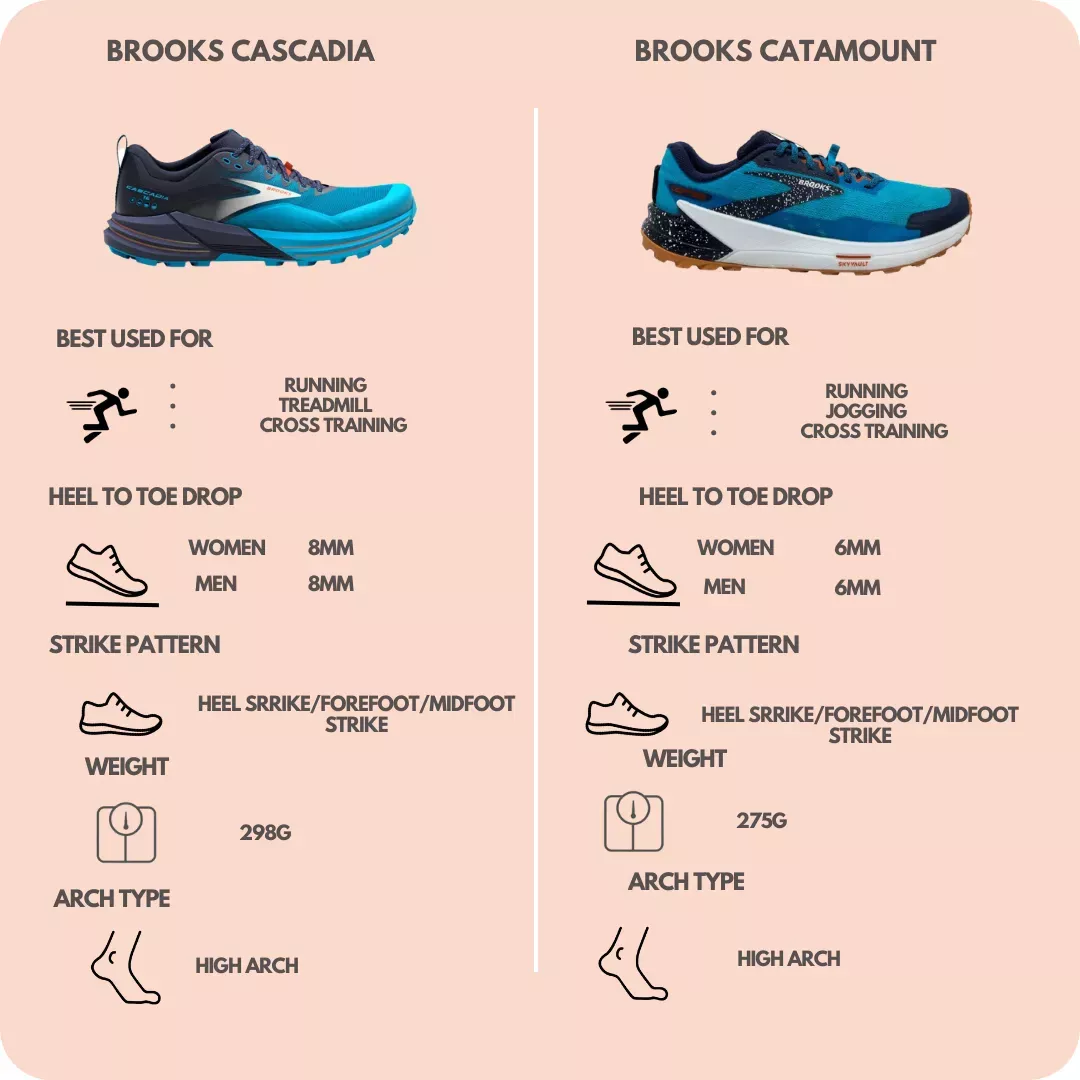
Overview of Brooks Cascadia and Catamount
Brooks Cascadia and Catamount are two popular trail running shoes from the Brooks brand. Each shoe is designed to tackle different types of trails and offer unique benefits. Let’s explore what makes each of them special.
Overview of Brooks Cascadia
The Brooks Cascadia is built for rugged terrains. It has been around for more than ten years and is known for its durability. Many trail runners trust it for its strong build and reliable performance.
One of the key features of Cascadia is its rock shield that protects your feet from sharp objects. The shoe’s midsole provides excellent support. This makes it a favorite for long, rough trails.
Cascadia also comes with a secure fit, ensuring your foot stays in place. This prevents blisters and makes your run more comfortable. It’s perfect for those who need stability on uneven paths.
Moreover, the traction on Cascadia is noteworthy. It grips well on wet and dry surfaces. So, no matter the weather, Cascadia keeps you steady.
Overall, Brooks Cascadia offers protection, durability, and comfort. It’s designed for serious trail runners who face challenging terrains. This shoe is a reliable choice for any adventure.
Overview of Brooks Catamount
The Brooks Catamount is designed for speed. If you’re looking to run fast on trails, this is the shoe for you. It is much lighter than the Cascadia, making it ideal for quick movements.
Catamount comes with DNA Flash cushioning. This special foam helps you bounce back with every step. It offers comfort without weighing you down.
One standout feature of the Catamount is its drainage system. If you step in water, it dries quickly. This prevents your feet from feeling heavy and wet.
The traction on the Catamount suits softer trails like forest paths. It adapts well to muddy and uneven surfaces. This shoe is great for varying terrains.
The Brooks Catamount is all about speed and agility. It combines a lightweight design with great cushioning. This makes it perfect for runners who love to go fast and far on the trails.
Key Features Compared
When choosing between the Brooks Cascadia and Catamount, understanding their key features can help you make the best decision. Let’s compare both shoes across several important features to see how they stack up against each other.
Durability
Brooks Cascadia is known for its strong build. It is designed to withstand tough and rocky trails. This makes it a favorite for long-distance runners.
On the other hand, Catamount is lighter but still very durable. It uses a different kind of material that is both light and strong. This helps it last long, even on softer trails.
While both shoes are durable, Cascadia might be the better choice for rough terrains. Its sturdy design helps protect your feet. However, Catamount’s durability is impressive for its weight class.
Durability is essential when considering trail shoes. Brooks Cascadia wins here for rocky paths. But Catamount holds its own with softer terrain.
Weight
The weight of a shoe can affect your running speed. Cascadia tends to be heavier due to its protective features. This weight adds stability but might slow you down a bit.
Catamount, however, is much lighter. This makes it better for runners who prioritize speed. The lightweight design helps you move quickly and change direction easily.
Having a lighter shoe can be a big advantage in races. Catamount’s weight makes it ideal for such situations. It combines lightweight with good support.
Weight matters when you want to go fast. Catamount offers better speed due to its lighter structure. Cascadia is heavier but provides extra protection.
Cushioning
Both shoes are comfortable, but their cushioning is different. Cascadia has a thick midsole for better support. This makes it comfortable on rocky trails.
Catamount uses DNA Flash cushioning. This foam helps you bounce back with each step. It’s designed for speed and comfort together.
Cushioning affects how your feet feel after long runs. Cascadia offers more protection for tough surfaces. Catamount gives a quicker, bouncy feel.
Comfort is key for long-distance running. Cascadia focuses on support and protection. Catamount combines speed with a softer feel.
Traction
Traction is very important in trail running shoes. Cascadia has great grip on both wet and dry surfaces. This makes it ideal for uncertain trails.
Catamount also has good traction, but it is better suited for softer trails. Its design adapts well to mud and forest paths. Both shoes keep you steady.
However, in very rocky or slippery conditions, Cascadia might have an edge. Its traction pattern is designed for tougher terrains. Catamount excels on softer ground.
Traction keeps you safe on trails. Cascadia offers better grip for rough paths. Catamount performs well on softer, muddy terrains.
Fit
The fit of a shoe can make or break your run. Cascadia comes with a secure fit. This prevents your foot from moving inside the shoe.
Catamount also provides a snug fit. It adapts to your foot shape quickly. Both shoes aim to offer comfort and prevent blisters.
Having a good fit helps in long runs. It cuts down the risk of blisters and discomfort. Both Cascadia and Catamount do well here.
Fit is crucial for any runner. Both shoes offer a good, snug fit. You can choose based on comfort and preference.
For more detailed insights from other runners, check out this expert opinion.
Brooks Cascadia Vs Catamount: Feature Comparison
Both the Brooks Cascadia and Catamount are popular among trail runners. Each shoe has different features that make them unique. Let’s compare them side-by-side to see which one might be the best fit for you.
| Feature | Brooks Cascadia | Brooks Catamount |
|---|---|---|
| Durability | High, ideal for rugged terrains | Moderate, suited for softer trails |
| Weight | Heavier | Lighter |
| Cushioning | Thick midsole for support | DNA Flash cushioning for bounce |
| Traction | Excellent on wet and dry surfaces | Good on soft, muddy trails |
| Fit | Secure fit for stability | Snug fit for comfort |
| Rock Shield | Included | Not included |
| Water Drainage | Basic water resistance | Quick-dry drainage system |
| Speed | Moderate speed | High speed |
| Midsole Support | Robust midsole | Lightweight but supportive midsole |
| Overall Comfort | High, especially on rough trails | High for softer, varied terrain |
The Good and The Bad
Both the Brooks Cascadia and Catamount have their strengths and weaknesses. Understanding these can help you decide which shoe is right for you. Here is a comparison of the good and the bad for both models.
| Pros | Cons |
|---|---|
| Brooks Cascadia is highly durable | Heavier than the Catamount |
| Excellent traction on wet and dry surfaces | Basic water resistance only |
| Thick midsole for added support | Slower speed due to weight |
| Great rock protection | Can feel bulky for some runners |
| Secure fit for long runs | Not as quick-drying as the Catamount |
| Catamount is lightweight and fast | Moderate durability |
| Quick-dry drainage system | Less protection on rocky trails |
| DNA Flash cushioning for comfort | Less grip on extremely rough surfaces |
| Snug fit adapts to foot shape | Not as much midsole support |
| Great for soft and muddy trails | Not ideal for the roughest terrains |
Price Comparison
When choosing between the Brooks Cascadia and Catamount, price can be an important factor. Both shoes offer great features, but their costs differ. Here’s a comparison of their prices.
| Brooks Cascadia | Brooks Catamount |
|---|---|
| Approximately $130 | Approximately $160 |
| Mid-priced trail shoe | Higher-priced trail shoe |
| Offers great value for rugged trails | Worth the price for speed and agility |
| Often available at discounts | Occasional sales available |
| Includes rock protection at a fair price | Includes advanced cushioning for the extra cost |
Which Is Better?
Choosing between the Brooks Cascadia and Catamount can be tough because both shoes offer exceptional features. Brooks Cascadia is a solid choice for rugged trails due to its durability and rock protection. It provides excellent support and traction, making it ideal for long-distance runners who tackle challenging terrains. However, some may find it a bit heavy.
On the other hand, the Brooks Catamount is designed for speed and agility. Its lightweight design and quick-dry features make it perfect for softer trails and muddy paths. The DNA Flash cushioning provides a bouncy feel, which many runners appreciate. But, it may not offer the same level of rock protection as the Cascadia.
If you prioritize rugged durability and need strong foot protection, the Brooks Cascadia may be your best bet. If you’re looking to zip through trails quickly and prefer a lightweight shoe, then the Catamount could be the better option. Both shoes are excellent, but one might fit your personal running style better than the other.
After considering all features and their specific strengths, the Brooks Catamount edges out slightly for those who value speed and agility on softer trails. It combines lightweight design with advanced cushioning, making it a top choice for many runners.
- Lightweight design provides faster pace.
- Quick-dry drainage system for wet conditions.
- DNA Flash cushioning offers excellent comfort.
Performance in Different Terrains
When it comes to different terrains, the Brooks Cascadia stands out for its rugged performance. Designed with a secure fit and robust traction, it excels on rocky and uneven surfaces. This shoe is ideal for long, challenging trails where stability matters most.
In contrast, the Brooks Catamount shines on softer, muddier trails. Its quick-dry drainage system is especially useful in wet conditions. The lighter build also provides agility, making it perfect for forest paths and muddy runs.
For those running on mixed terrains, choosing between these two shoes can be tricky. However, Cascadia’s adaptable design offers a versatile solution for varied surfaces. Its durable build ensures you can tackle both rough and smooth trails confidently.
Meanwhile, the Catamount’s DNA Flash cushioning makes it highly effective in environments where speed is crucial. This feature allows for a more comfortable run, even when the ground is less predictable. The shoe’s traction is optimized for softer ground, giving you an edge on wet trails.
If you frequently encounter wet or muddy trails, the Catamount is a great choice. Its drainage system and lightweight design keep your feet dry and nimble. However, if your paths are usually rocky and rugged, Cascadia’s sturdy construction will provide the long-lasting support you need.
To summarize, both shoes excel in different terrains but offer unique advantages. Cascadia is your go-to for rocky, challenging trails, while Catamount is perfect for soft, muddy conditions. Choose based on your primary running environment to get the best performance out of your shoes.
User Experience Comparison
User experiences vary between the Brooks Cascadia and Catamount, but both shoes have their dedicated fans. The Cascadia is often praised for its durability and protective features. Runners appreciate how the rock shield protects their feet from sharp objects on rugged trails.
Many users find the Catamount’s lightweight design to be a major plus. Its quick-dry system is another feature that gets a lot of positive feedback. This makes it an excellent choice for those who frequently run in wet conditions.
Comfort is another critical aspect when comparing these two models. The Cascadia’s thick midsole offers more support, making it comfortable for long distances. On the other hand, the Catamount’s DNA Flash cushioning provides a softer, bouncier feel.
Runners also comment on the fit of both shoes. Cascadia’s secure fit is favored by those who navigate uneven terrains. Catamount, however, adapts well to the shape of the foot, providing a snug and comfortable experience.
Traction differences are frequently highlighted in user reviews. Cascadia’s excellent grip on rocky surfaces is appreciated for added stability. Meanwhile, Catamount’s traction is favored for softer and muddier trails.
Overall, user reviews suggest that the Brooks Cascadia is the better option for rugged, challenging terrains, while the Brooks Catamount excels in soft, muddy conditions. Your choice should depend on the type of trails you run most often.
Key Takeaways
- Brooks Cascadia is highly durable and ideal for rough terrains.
- Brooks Catamount is lightweight and perfect for softer trails.
- Cascadia offers thick midsole support for long-distance comfort.
- Catamount features DNA Flash cushioning for a bouncy feel.
- Cascadia excels in traction on wet and dry surfaces.

Frequently Asked Questions
Choosing the right trail running shoe can be challenging with great options like Brooks Cascadia and Catamount. Here are some frequently asked questions to help you decide.
1. What are the primary differences between Brooks Cascadia and Catamount?
The Brooks Cascadia is designed for durability and rough terrains. It offers excellent rock protection and a secure fit, making it ideal for long, rugged trails.
In contrast, the Brooks Catamount focuses on speed and agility. Its lightweight design and DNA Flash cushioning make it perfect for softer, muddy trails and quicker runs.
2. Which shoe is better for rocky terrains?
For rocky terrains, the Brooks Cascadia is generally the better choice. Its robust build and rock shield provide superior foot protection against sharp objects.
The Cascadia also offers better traction on uneven surfaces, making it suitable for challenging trails where stability is key.
3. How do the shoes perform in wet conditions?
The Brooks Catamount excels in wet conditions due to its quick-dry drainage system. This feature helps to keep your feet dry and light, even when running through puddles or mud.
Brooks Cascadia also performs well but lacks the advanced drainage system. It still provides decent water resistance, making it a good choice for wet, rugged trails.
4. What makes the Catamount a better choice for speed?
The Brooks Catamount’s lightweight design makes it optimal for those who prioritize speed. The DNA Flash cushioning provides a responsive, bouncy feel, enhancing your running pace.
Additionally, the Catamount’s snug fit and flexible structure give you the agility needed for quick movements, making it excellent for races or fast trail runs.
5. Are both shoes comfortable for long-distance running?
Yes, both shoes offer comfort but in different ways. The Brooks Cascadia features a thick midsole that provides extra support and comfort on long, rugged trails.
The Brooks Catamount offers DNA Flash cushioning, which delivers a softer and more responsive feel, making it ideal for longer runs on softer terrains.
Brooks trail shoe review – comparison of Brooks Catamount vs Brooks Cascadia 15
Conclusion
In the debate between Brooks Cascadia and Catamount, each shoe brings unique strengths to the table. For those who tackle rugged, rocky terrains, the Cascadia provides unbeatable durability and support. Its robust features ensure your feet stay protected and comfortable over long distances.
On the other hand, the Catamount shines for runners seeking speed and agility on softer, muddier trails. Lightweight and equipped with quick-dry technology, it offers a responsive and bouncy feel. Ultimately, your choice should align with your specific trail running needs and preferences.
Recent Posts
Understanding that over 2 million Americans are affected by plantar fasciitis each year highlights the significance of proper footwear. The pain and discomfort caused by this condition can derail...
Have you ever wondered why so many runners experience injuries every year? A staggering 79% of recreational runners get injured, and a major culprit is often the wrong choice of running shoes. It's...